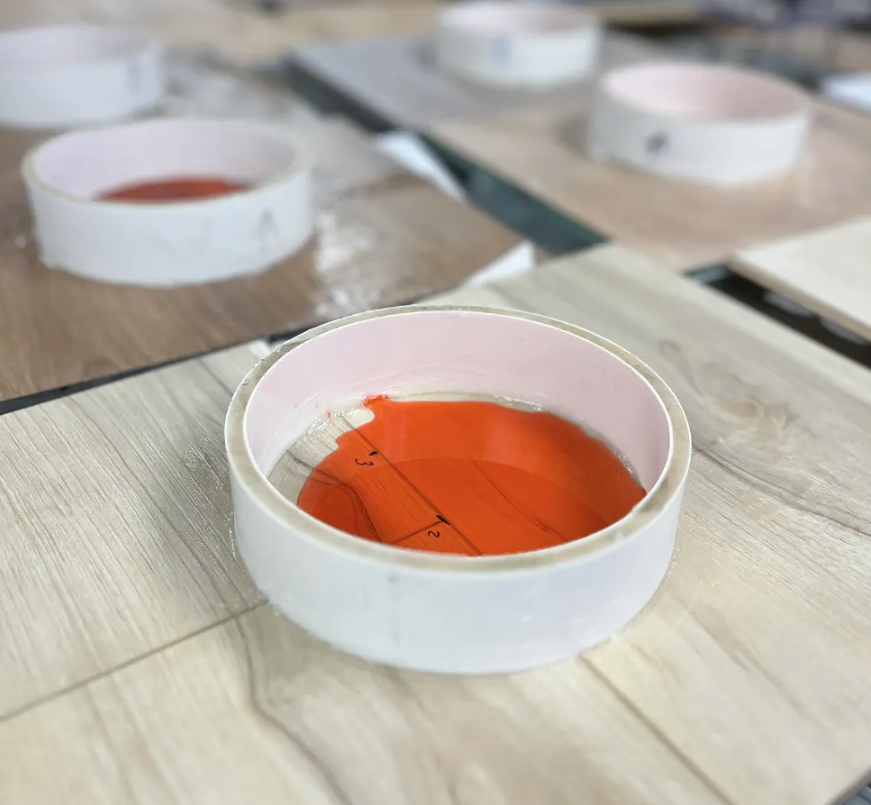
Carpet testing is an important step in product development and quality control. Let’s look at 5 key reasons why carpet testing services are essential for product manufacturers.
1. Verifying Durability and Wear Resistance
Carpets are subjected to repeated foot traffic, which can lead to fiber wear, matting, or loss of appearance over time. Laboratory testing simulates these conditions to evaluate how well a carpet holds up under use.
This helps manufacturers ensure their products meet durability expectations for both residential and commercial applications.
2. Evaluating Resistance to Soiling and Staining
Carpets are highly susceptible to dirt and stains, which can impact both appearance and customer satisfaction. Testing methods such as accelerated soiling help measure how well a carpet resists dirt accumulation and how easily it can be cleaned.
This data is critical for developing products that maintain their appearance over time.
3. Assessing Colorfastness and Appearance Retention
Exposure to light, ozone, and environmental pollutants can cause fading or discoloration. Carpet testing evaluates colorfastness to ensure products maintain their original appearance under various conditions.
Consistent color performance is essential for customer satisfaction and long-term product value.
4. Measuring Dimensional Stability
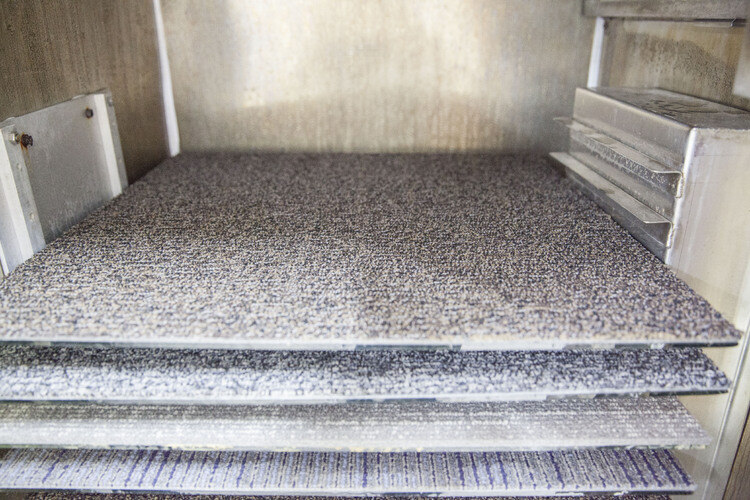
Changes in temperature, humidity, or moisture can cause carpet tiles to expand, contract, or warp. Dimensional stability testing ensures that carpets maintain their size and shape after installation.
This helps prevent issues such as gaps, buckling, or installation failures.
5. Supporting Compliance With Industry Standards
Carpet products are often required to meet specific performance standards, including ASTM and other industry-recognized methods. Testing ensures that products are evaluated consistently and meet required specifications.
Compliance with these standards is often necessary for commercial use, retailer approval, and project specifications.
Why Carpet Testing Matters for Manufacturers
Working with a professional testing laboratory:
- Confirms product performance and durability
- Supports compliance with industry standards
- Improves product development and material selection
- Reduces the risk of failures and returns
- Builds confidence with customers and buyers
Carpet testing services provide the data needed to deliver reliable, high-quality products.
Working With an Accredited Laboratory
Professional Testing Laboratory is accredited to ISO/IEC 17025, ensuring that carpet testing is conducted with accuracy, consistency, and validated methods.
Our experience with carpet and flooring materials allows us to provide reliable results that manufacturers can trust.
Ensure Performance With Professional Carpet Testing
Carpet testing is a critical part of delivering products that meet performance expectations and industry requirements. Choosing the right laboratory helps ensure your products are tested accurately and consistently.
Contact Professional Testing Laboratory today to discuss your carpet testing needs.
FAQ: Carpet Testing Services
What is carpet testing?
Carpet testing evaluates performance characteristics such as durability, colorfastness, dimensional stability, and soiling resistance.
Why is carpet testing important?
It helps ensure products perform as expected, meet industry standards, and maintain quality over time.
What standards are used in carpet testing?
Common standards include ASTM and AATCC methods for wear, colorfastness, and soiling resistance.
When should carpet testing be performed?
Testing is typically conducted during product development, before market launch, and when materials or processes change.

.png)